3                                                                                                Brainwave Connections                                                                        Summer 2005

Text Box: It all began in May of 1978 when I took my initial biofeedback training with Tom Budzynski, at the Biofeedback Institute of Denver. From that time until 1990, I combined biofeedback with my clinical practice. I did have a Twilight Learner that Tom worked out with Biofeedback Systems of Boulder, but that was the only EEG work until 1990.
I then went to Knoxville and studied with Joel Lubar for a few days and was off and running in the wild and wooly world of neurotherapy. I might add that any new health movement, whether it be behavioral or drugs, goes through a panacea stage filled with excitement and “magical cures.” Of course there are also solid findings if you take time to dig them out.
I jumped in with much gusto and purchased a Lexicor NRS-24 from Tom Allen. There were also many phone calls to Tom as I ran into questions. To this day Tom is the sole voice that spoke often about the importance of breathing while doing neurotherapy.
I vividly recall my first case. It was an ADHD patient and I was doing a theta down, beta up protocol. The first few minutes seemed to be going along well and I was thinking this was a piece of cake. Then, Bam! The youngster couldn’t do anything.
I called Tom in a panic and he told me to watch how the boy Text Box: was breathing. Sure enough, at the next session, the first two or three minutes went O.K., then the boy started breathing very shallow, and his brain training started to fall apart again. When I taught him to breathe properly, his brain was able to train again.
As I proceeded to become a workshop “junkie” I started to become aware of the conflicting claims of some of the authorities. Claims were being made about the superiority of different makers of equipment. Other claims were made about protocols and there were diverse opinions about what data led to the best choice of treatment protocols. There was science and there was mysticism, but no good foundational material that everyone could agree upon.
I noticed then, and do now, that an awful lot of time is spent on trying to get equipment and/or software to work. It is not uncommon to buy equipment or software and then have to take a (not inexpensive) workshop to learn how to get things working.
I finally decided to not be blown about by the various claims and/or testimonials and started testing things in my own clinic. Following are some things I have observed, but I wish to be quick to add they are not aimed at any persons.
Up training fast frequencies is best accomplished by downtraining slow activity. Text Box: For example I get much better results downtraining delta of low theta as a means of increasing beta.
One exception to this is alpha/theta training. I have found however, that after just a few sessions, most patients don’t increase alpha and theta very well. What works well to get alpha/ theta increase is use of audiovisual entrainment. I use the ROSHI and the David, Paradise XL+ to accomplish this.
While there are some practitioners who speak of getting better results by changing a particular band one or two hertz, I have been unable to replicate this. Neither have I been able to replicate some of the 40-hertz, or (recently close to) 60-hertz claims that are floating about. Training some of the lower frequency harmonics of the higher frequencies seems to do as WELL or better.
I sometimes get a chuckle when I read about all kinds of new and exciting displays for training ADD/ADHD patients. In my experience the last thing you want to do is create displays with a high degree of novelty. What the ADD/ADHD people have trouble with is dull, boring material.
It could be argued that, because of their needing novel stimuli, that something as boring as making a bar or a circle change would turn the client off. 
(continued on page 4)
Text Box: Personal Commentary—Things Noticed Along the Way
Text Box: When I taught him to breathe properly, his brain was able to train again..

Article by:


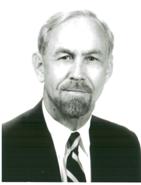
Hal Schaus Jr., M.S., DAPA

Text Box: ...the last thing you want to do is create displays with a high degree of novelty...