3                                                                                                Brainwave Connections                                                                          Winter 2006

Text Box: In the very early days of neurotherapy becoming a way of treating various problems, it was tough sledding. The cost of getting just the hardware and software was in the fifteen thousand dollar range if you bought a new Lexicor. If you wanted a training system, other than Lexicor, it meant a few more thousand dollars. Pile on top of that the cost of conferences and supervision to learn how to practice neurotherapy and you could well be facing somewhere around thirty thousand dollars.
Fortunately, the cost of quality training systems, such as BrainMaster and less expensive acquisition systems has helped some interested people to not be knocked out by cost alone. However, there has been a nagging problem continuing over from the early days. Namely, how and where do you get information that ties together the many concepts, terms, approaches and products that are currently a part of the field?
A growing segment of those persons using neurotherapy are people who wish to train in their own homes. Often a child with a problem or an adult, who has limiting factors that rule out going to a neurotherapy professional on a satisfying schedule, wants to train within their own home or office. Further, how does such a person gain knowledge to go about doing things well? 
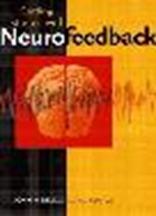
Text Box: John Demos understands the plight of the person trying to get into neurotherapy, as well as the intermediate who has bits and pieces but no good overview.  From the confusion of the early days when there was no unifying text or materials, Mr. Demos has not only patched up the nicks his psyche took early on, he has done something about it. Now, rather than go to a meeting and getting a piece of a larger picture, but a picture unclear, we have the first legitimate primer for the neurotherapy field.
This 281-page book is written in a clear and understandable style that can help a person get to a point where they don’t have to feel like a dummy when they hear someone talk about some aspect of neurotherapy. On a personal note, I can well recall the first meeting where I heard someone talk about neurotherapy. I thought to myself, “What’s all this talk of CZ, FZ, PZ?” I might as well have been in a country where they spoke a language I didn’t understand. I should mention, though, that even though there were unfamiliar terms, I sensed that this was about something that had real promise as a treatment modality for certain problems. I was hooked.
The person reading this book is going to get information on the history of EEG and early clinicians in neurotherapy. The formal part of the book ends a nice journey with tips on setting up your own practice if you are a Text Box: professional and wish to go that route.
 Hitting the high points of neurophysiology is clear and uncomplicated. Telling what part of the brain is often involved in various cognitive operations and mood states will help formulate thoughts about where to look for certain problems.
There is a good progression of information on interviewing, various assessment instruments (including check lists) and a nice section with colored plates showing tables and graphics from most of the major qEEG database scoring programs. While the qEEG information is not extensive (qEEG is not a simple subject) at least the reader will have speaking familiarity with some of the main terminology. 
Case studies and the formulation of treatment plans should be comforting to the reader and he or she will be able to approach their patients/clients with some confidence that stems from decisions having a base in knowledge in the field. There are also tips on monitoring treatment progress so ideas about modifying treatment protocols can be generated.
For the person desiring knowledge on how the hardware and software end of things works, Mr. Demos gives the essentials. He also explains how there is an international nomenclature identifying scalp location and explains how to locate them. 
Text Box: Invited Book Review
Text Box: Getting Started With Neurofeedback. 
Demos, John N. Norton & Company. New York.2005
Text Box: Reviewed by:
Hal Schaus,
Private Practice. Akron, Ohio.