Dates TBA
Price: $695
CE's: 22.5
Instructors:
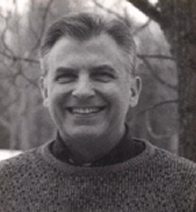
John N Demos, MA,
LCMHC
Thomas Collura, Ph.D.,
P.E.
--------------------------
Mini-Q with Intermediate/Advanced
Applications
Health care
professionals will be trained in the art of QEEG data
acquistion with
EEG recording caps as well as intermediate/advanced
neurofeedback
applications. The advantages of "z" score training will be explored and
demonstrated. Group mentoring hours will be available for certification
candidates with case studies.
Participants are professional
health care providers who meet the
following prerequisites:
1.
Minimum of 6 months neurofeedback training experience.
2. If you are
bringing equipment, downloaded latest upgrade (either 2.5
or 3.0) of
BrainMaster software with laptop (additional works stations
will be be
available for those who do not as yet have miniQ or
BrainMaster
software or equipment)
3. Bring MiniQ equipment, software and EEG
recording caps unless you are coming to learn how to acquire data via EEG recording caps. (Extra caps
will be available at seminar)
4. Most participants will experience a
miniQ assessment and analysis.
6. If you
are interested in acquiring BCIA group mentoring hours
on the third
day, you must bring in your own case studies along
with de-identified
client EEG data and protocols.
<Lunch is included in your tuition fee for all three
days>
Monday (9:00am-
5:30pm):
Equipment
orientation:
Tom Collura; QEEG
concepts and history as well as orientation for MiniQ
use with
BrainMaster software. Basic QEEG analysis theory. Absolute
vs.
Relative, Coherence, Butterworth filtering, Ratios, whole brain
analysis with 12 International 10-20 sites. "Z" score training will be
reviewed and demonstrated.
Lunch 12:30pm - 1:00
pm
Data acquisition theory and
demonstration:
John Demos: DCN-128
REFERENCING database software will be used and
participants will
observe EEG recording cap fitting. Students will be
introduced to
protocol selection based upon neurology, symptoms and
miniQ data. One
or more students will receive a comprehensive miniQ
analysis.
Tuesday (9:00am-
5:30pm):
Lunch
(12:30-1:30)
MiniQ Practicum and Part
I of protocol development:
Participants will be trained to properly fit EEG
recording caps and to
reduce artifacts during EEG
acquisition.
Having miniQ data empowers the clinician to create a
variety of
effective neurofeedback protocols. Starting from the basics
of protocol
development more challenging protocols will be created
such as
Two-channel amplitude & squash training, Coherence
training,
Variability, Peak Frequency, Ratio and asymmetry training
settings.
Bandwidth tweaking will also be demonstrated.
Wednesday (9:00am-
5:30pm):
Lunch
(12:30-1:30)
Part II of protocol
development:
Continuation of
discussion on protocol development based on case
studies and
application. Training issues will also be considered.
Mentoring:
Individual case studies and questions from group
participants. Those
seeking BCIA certification will find this question
and answer discussion
vital to their progress as neurofeedback
providers. Please bring in
actual assessment and training data to be
shared with the group. All
confidential client information must be
de-identified. Certificate
candidates will be asked to sign a
mentoring contract.